This was the first real Rural explore that I went on. I'd seen the place on a website called
Dereliction in the Shires so after contacting the owner we arranged a day and set off starting at East Hanney and walking the route to Wantage. This stared off as a bit of an embarrassment due to us getting lost a bit and instead of following a footpath to the site we ended on the road but ended in the right place after following the footpath.

From the road this is where you start a bridleway with WIlts & Berks Canal on it

On the other side of the road a track which is the line of the old canal, follow the footpath and you should come to the A34 passing the remains of a lock, I'm not sure it runs under the A34 though as I have not been along this section

If you follow the footpath you should come to a bridge and see remnants of the canal

The footpath and track tell you it was the canal at one time

And this bridge is a big give away, the Great Western main line ran over it

Another footbridge will bring you to the first lock

Which looked in remarkably good condition considering it has been derelict for over 100 years, the lock gate hanging there I found amazing

Parts of the lock

I love the way nature takes over

Tree roots everywhere

And trees growing out of the lock itself

Onto the next one

Passing the remains of a lock side building

You will find the next lock not far away

And the remains of a building

The lock is covered in vegitation

going near the edge is dangerious near the ivy and trees block your path

The lock chamber

In the chamber

Chamber and lock gate

Unusual find is a milestone by the lock

The footpath will take you to the road from Lanes Barn to Grove and you will hav eto walk back along it to find the place a bridge would have been, its now culverted and the bridge removed.

From the top you can see where the canal used to be.

Parts where we followed the footpath

The next lock near grove
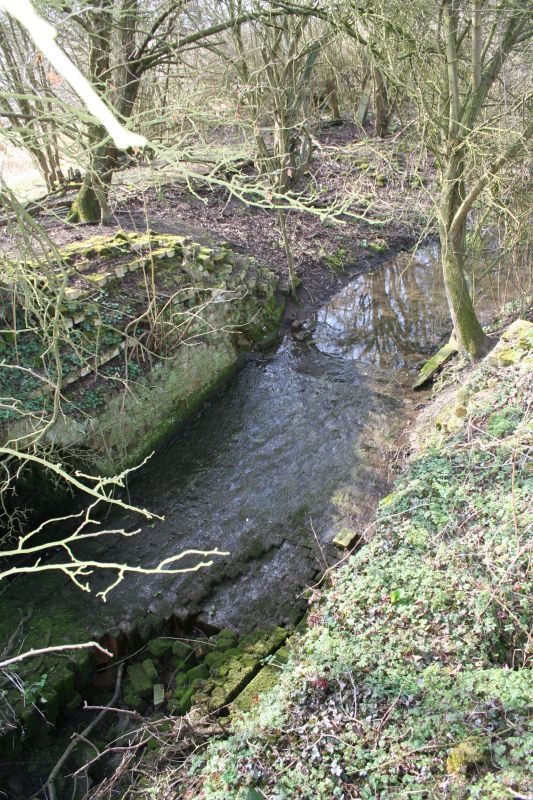
This one had water running through it

Which disappeared though the damaged brickwork

coming out in the main chamber

The chamber

Various parts of the lock

The lock

Last look at the lock

On to the next at Grove

This is one of the grove locks mostly filled in with rubbish and cable husks that have been dumped there

Trees have bee hard at work here as well

Doing there bit to demolish the lock

There is a bridge at the next lock

Which has been restored and is in use

Not sure there is much hope for the lock

Roots take hold in the walls

Holding cans in them

It looks in a very sad state

As you walk towards Grove you will pass a section that has bee restored with a weir and dummy lock gate

After that section you come to the Wantage spur

Which may have been a basin as well for barges to turn

You will pass the remains of a bridge

with old graffiti on it

You will eventually end up here where there were houses and building which may have been to do with the canal
 | |||||||
Which as you can see has been fully restored.

The reason for the spur ending here may have been for the flour mill which was in operation till 2022 when it closed and was taken over. I do not know what the places I visited are like now but if you want to find out it is and interesting explore
The last part of the Wilts and Berks canal.


.JPG)
.JPG)
.png)
.JPG)
.JPG)
.JPG)
.JPG)
.JPG)
.jpg)


.jpg)
.JPG)
